Starting point
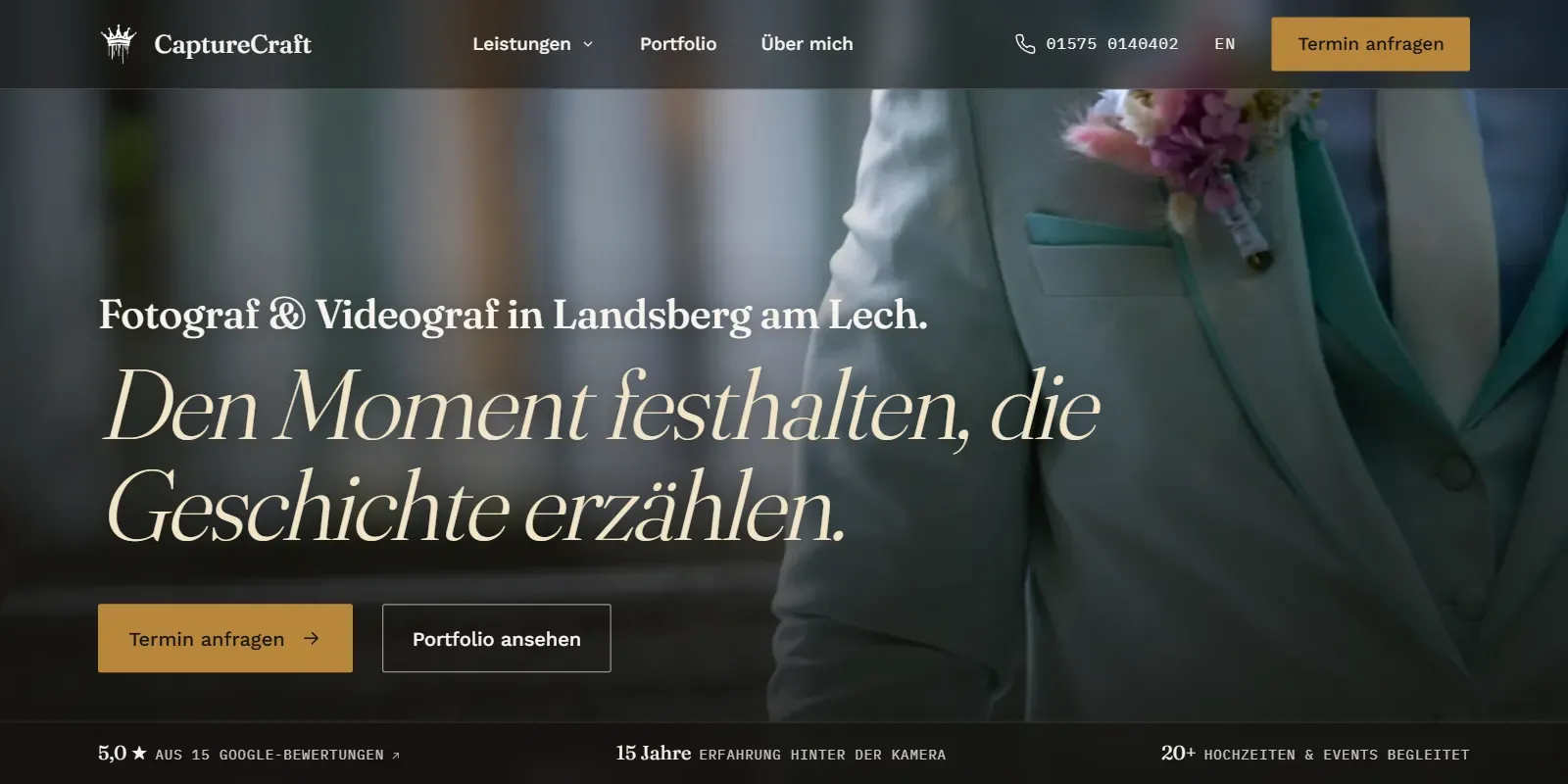
CaptureCraft was my first client project: the website of a photographer from Landsberg am Lech. The wish back then: large images and as little text as possible. The photos were meant to speak for themselves.
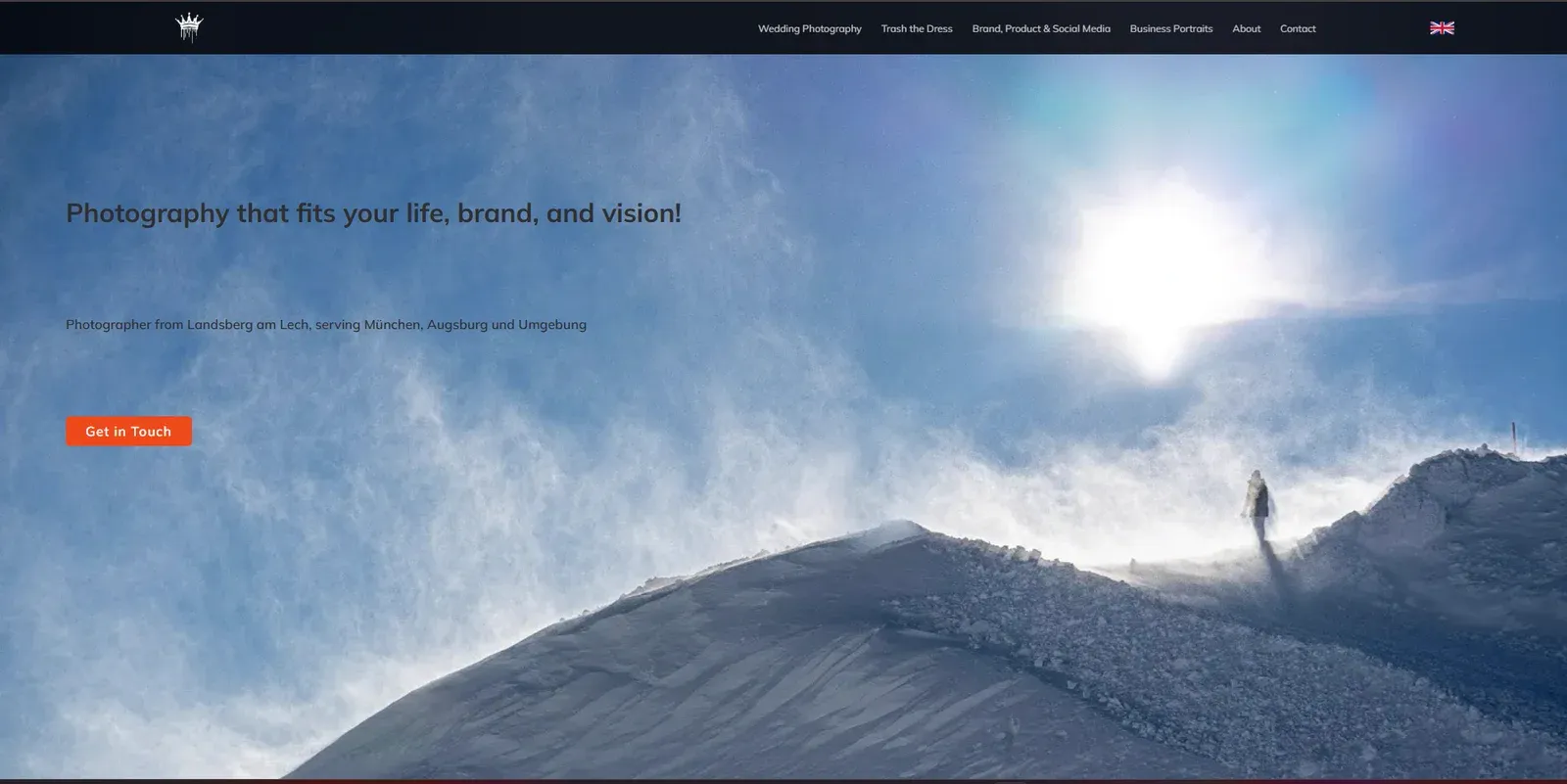
That is how the first version went live in early 2025. The home page showed a large photo, a headline, one line and a button.
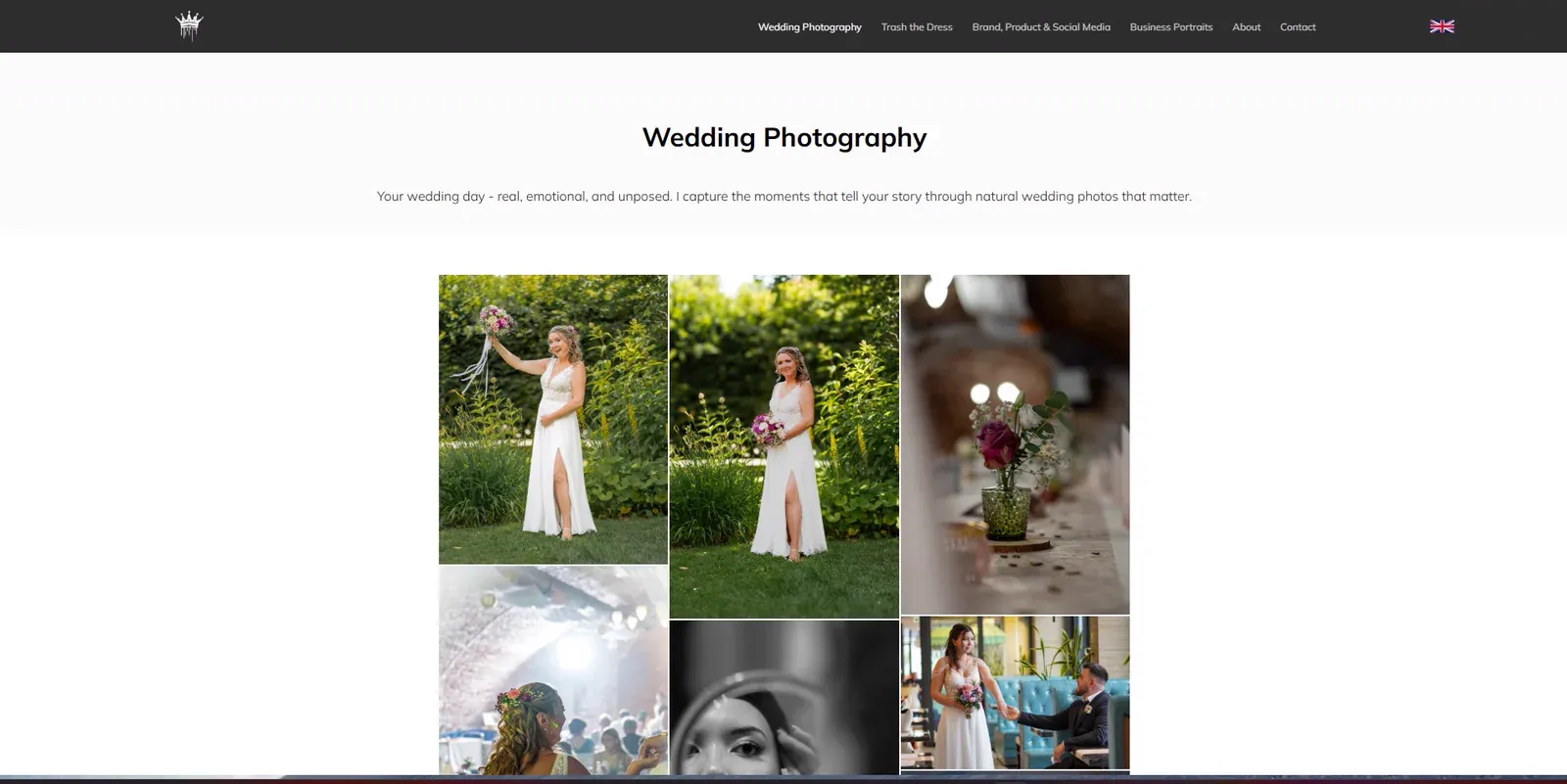
On the wedding page, one sentence was followed straight away by the gallery.
What was missing after a year
For the searches “Fotograf Landsberg” and “Hochzeitsfotograf Landsberg”, the website was on page 3 of Google. The Google Business Profile, the listing in Google Maps, was in 7th place.
There was no advertising and no ongoing work on the rankings. There were only about 20 links from other websites, which Google treats like recommendations, and I had added those by hand. For so little effort, that is a decent position. But most people click on the first results. Hardly anyone looks at page 3.
The website itself gave Google too little. It had seven pages: home, four services, “about me” and contact. For a search like “Hochzeitsfotograf Augsburg” (wedding photographer Augsburg) there was no matching page. Google places pages mainly by their text. Beautiful images alone do not answer a search.
Build
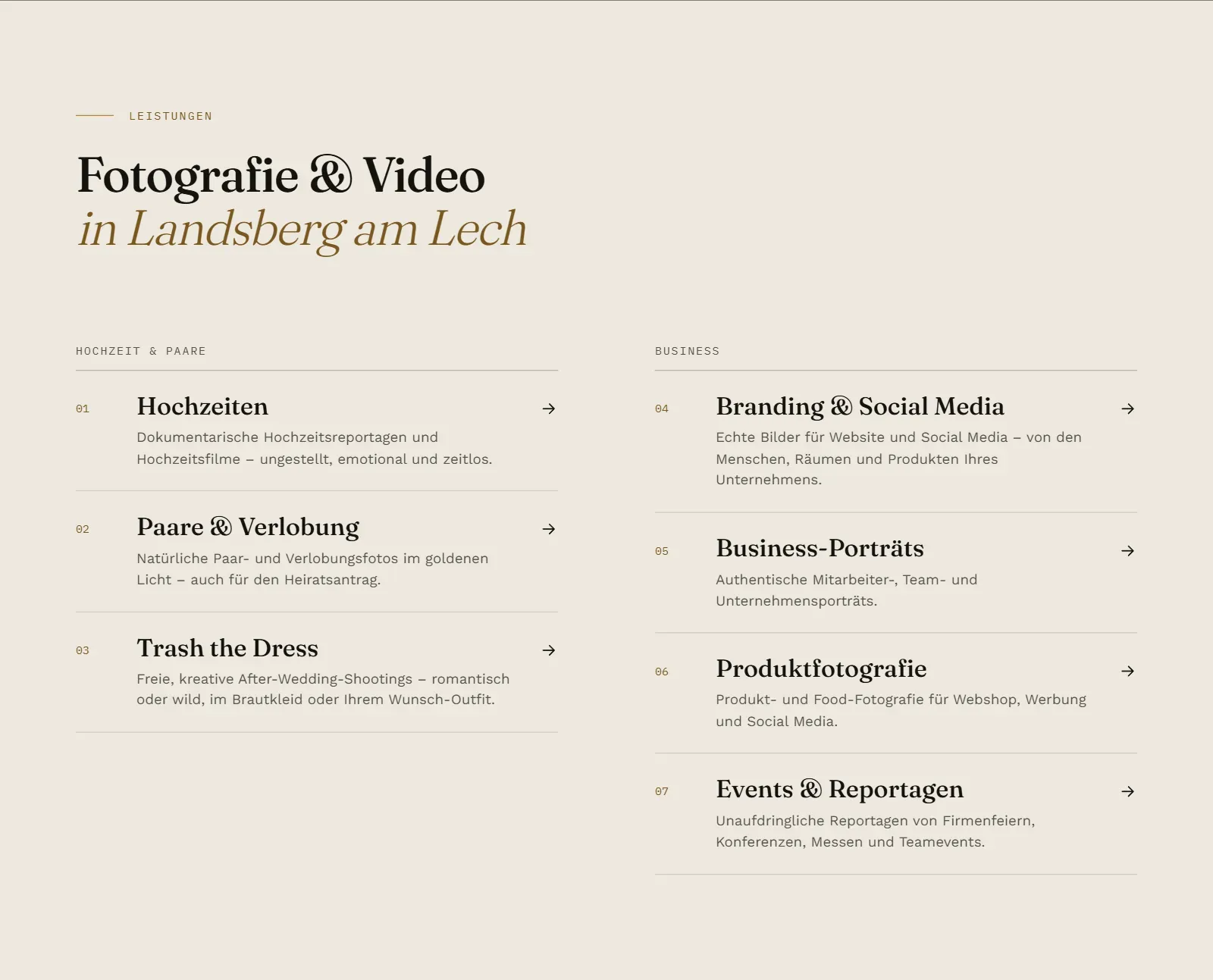
The new version went live in September 2026. The large images stayed. What is new are texts that match what customers search for, and a structure with 36 pages instead of seven.
One page for each service
Weddings, couples, trash the dress (a shoot in the wedding dress after the day), branding, business portraits, products and events each have their own page. Each one explains the process, names the prices and answers the most common questions.
One page for each place
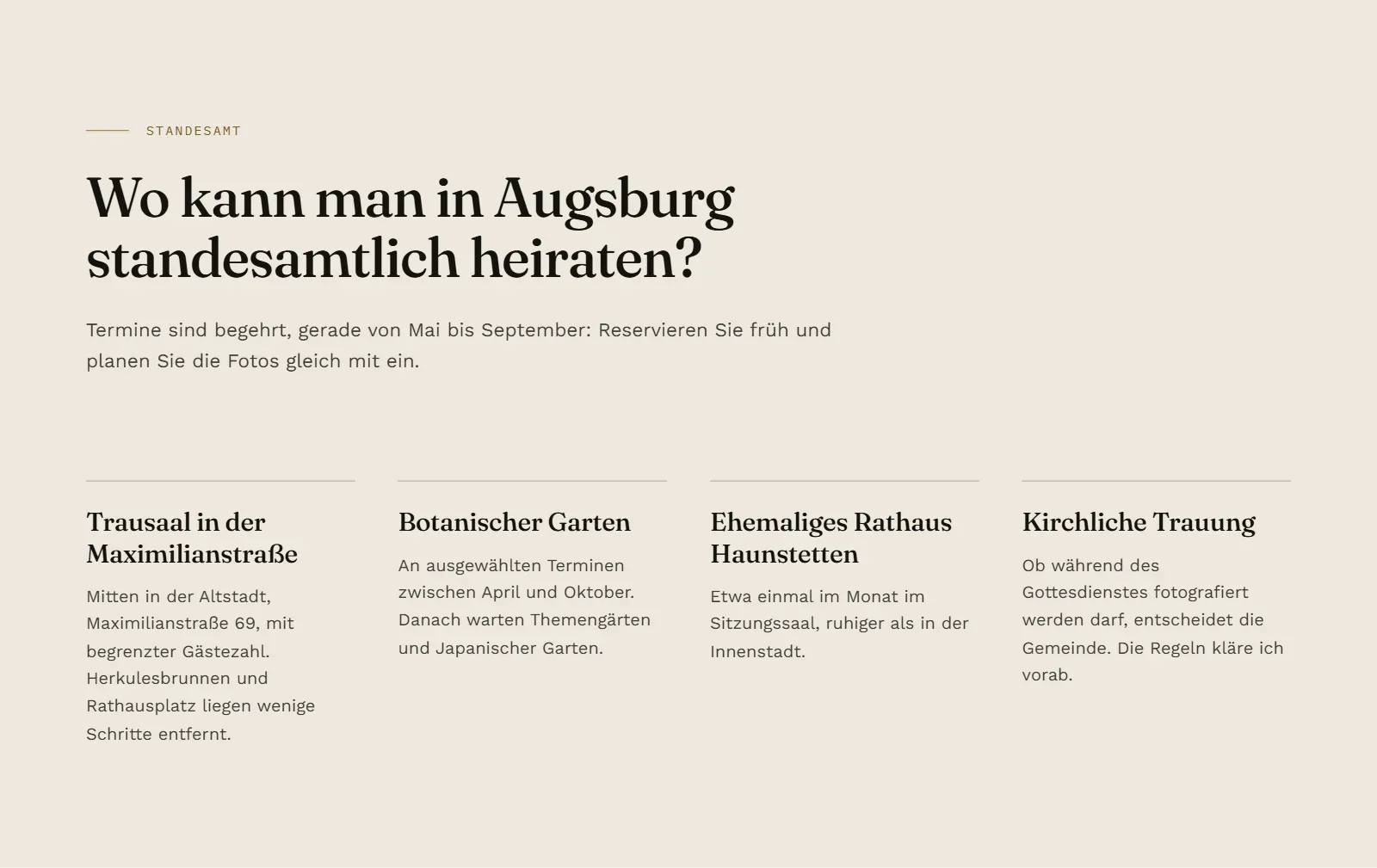
Couples often search with the place name, such as “Hochzeitsfotograf Augsburg”. For that there are now 15 local pages. Each has its own content: where couples can marry at the registry office there, and which spots work well for photos. Google ranks down pages where only the place name has been swapped.
Stories instead of a gallery
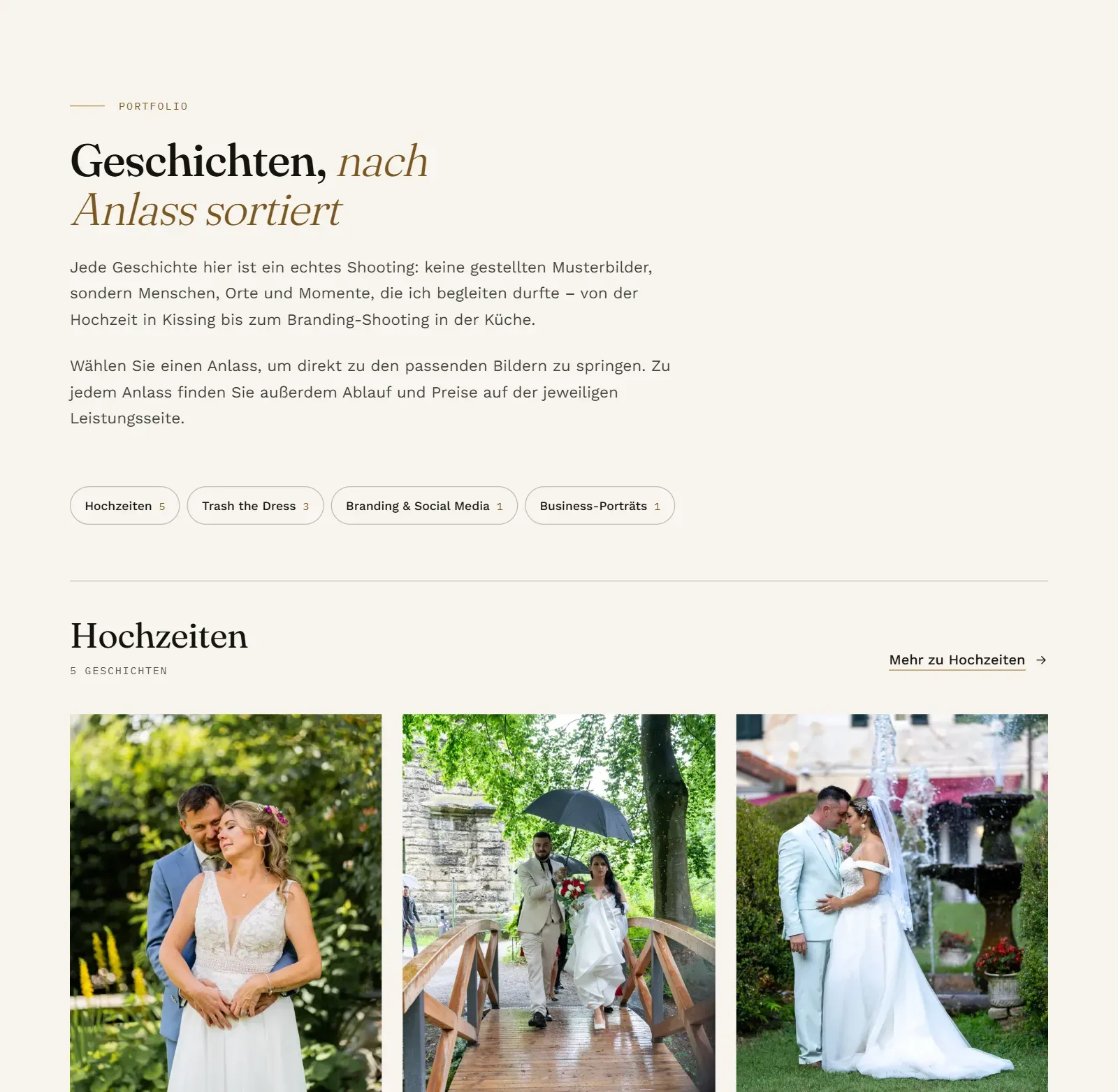
The portfolio shows ten real jobs, sorted by occasion. Each has its own page with place and occasion. Service pages and local pages link to matching stories. So a couple from Augsburg sees a wedding from nearby right away.
Answers before booking
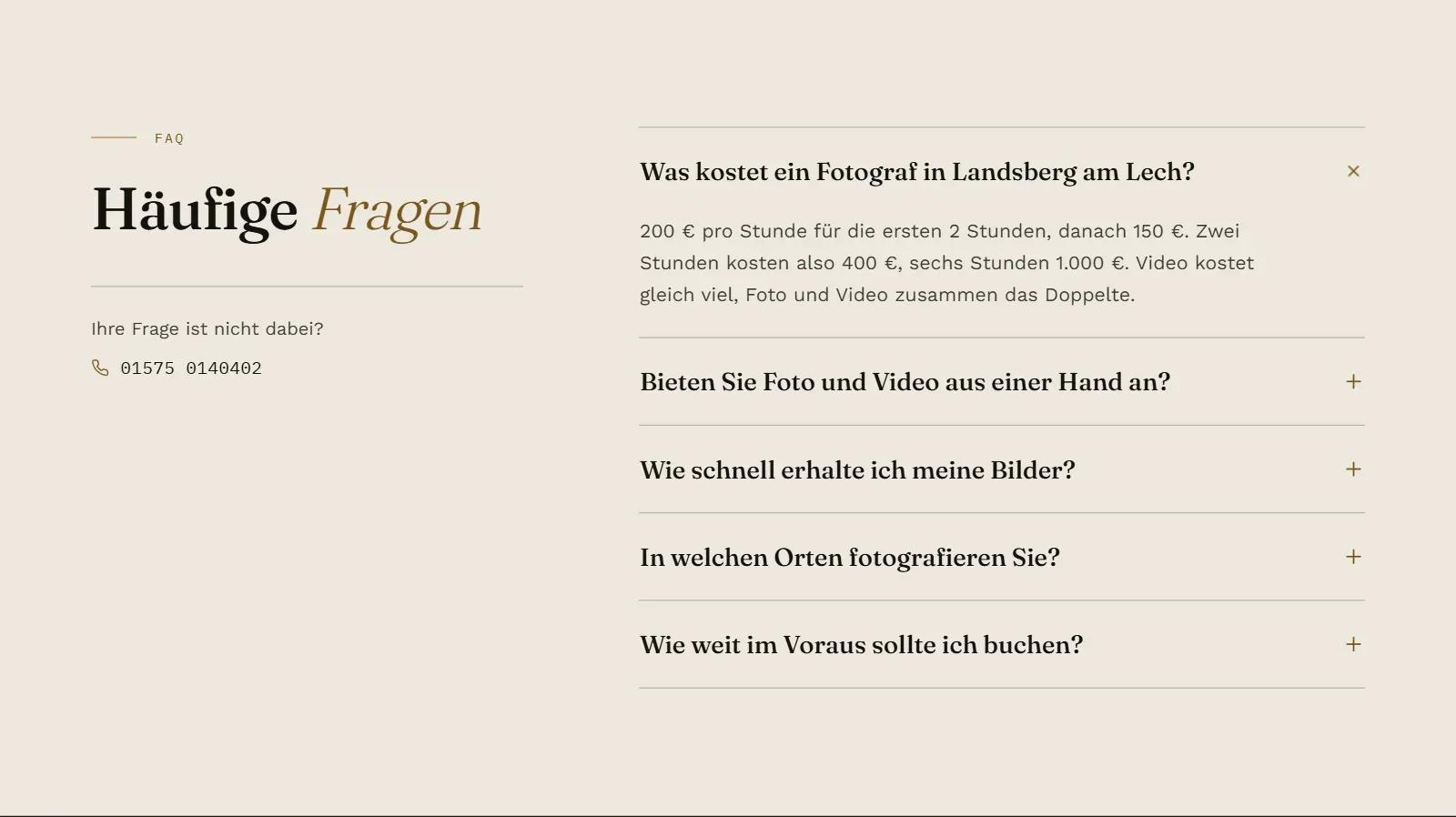
“How much does a photographer in Landsberg am Lech cost?” Questions like this are answered on the pages. In the code they are also stored as structured data: details from which Google can read services, prices, address and common questions directly.
Behind the scenes
The old addresses redirect permanently to the matching new pages. So nobody lands on an error page, and Google carries over what the old pages had already achieved. The website still runs through Cloudflare, a service that delivers the pages and protects them from attacks. The contact form keeps spam bots out with Cloudflare Turnstile.
Separate pages for services and places, a portfolio and a clear path to an inquiry: that is what a multi-page business website looks like, here for a photographer.
Result
The new version has been online since September 2026. Google now has to find and place the new pages. That usually takes weeks, often months.
So there are no measurable results yet. As soon as reliable figures are available, I will add them here. The comparison starts at page 3 and at 7th place for the business profile.
What I take away
- Images win visitors over. Text makes sure they find the website.
- Little text is an understandable wish. Today I explain before the start what it means for Google.
- More pages only help if each page has something of its own to say.
Would you like to know where your website stands? I check it free of charge. More about websites for photographers is on the page for photographers and creatives, and more about my work in the region under web design Landsberg am Lech.